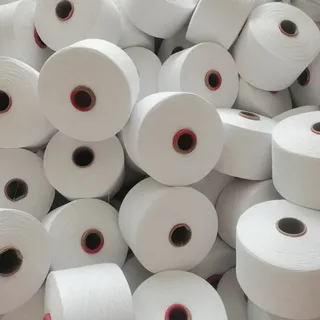
A seam can tell a farm story. If the cotton came from a field that keeps soil alive, the seam can carry that value to the shopper. To do this we need a path. From farm to gin to spinner to dye house to thread to machine. Each step has numbers. Each step has choices. This guide shows a simple way to trace impact and pick the right thread so the good work in the field stays real at the stitch.
What regenerative means in plain words
Regenerative farming is about healthy soil. Farmers add cover crops. They reduce heavy till. They rotate plants. They feed microbes. They keep water in the ground. The field stores more carbon. It needs fewer inputs over time. Yields can be stable after a set up period. Wildlife comes back. That is the idea.
Start with a farm program and proof
Pick a farm program that records a few clear things.
- Soil organic matter percent each season.
- Cover crop area and dates.
- Water use per hectare.
- Synthetic input cuts, like less nitrogen.
- Farmer training hours and safety.
Ask for a certificate or a field report with GPS and dates. Keep it in your product record. Simple and honest beats complex and vague.
Chain of custody without drama
Clean custody keeps trust.
- At the gin, bale IDs should link to the farm program lot.
- At the spinner, cone labels should link to bale IDs.
- At the dye house, shade cards should link to cone lots.
- At your thread warehouse, pallets should carry a lot code that matches the dye cards.
Put these codes in your PLM and tech pack. Use a QR that points to a short page with the key fields. No long stories. Just the facts.
Spinning choices that fit the job
Cotton behaves differently by twist and blend.
- Ring spun gives a soft hand and good strength for its size. Good for visible topstitch on natural looks.
- Compact ring reduces hairiness. The seam looks clean and pills less.
- Open end is lower cost and stable but coarser. Better for inside seams than hero topstitch.
Blend or mono. If your garment body is cotton rich and you want easy recycling, choose a cotton thread for visible lines. For high stress joins you can still use cotton wrapped over a polyester core (recycled polyester thread) where strength is critical. Pick what the seam needs and be clear about the trade.
Dye and finish with care
Natural threads can shift shade fast if the dye route is weak.
- Use reactive dyes with good wet and light fastness for cotton threads.
- Keep dye bath records and shade tolerances in delta E. Visible topstitch might need 0.8. Inside seams can live with 2.0.
- Finish the thread with a low friction lube that is friendly to later bonding or printing nearby. Avoid heavy silicone in zones that will see adhesive.
Picking the right thread for each seam
Think by function.
- Topstitch on denim or chinos with natural look. Use ring spun cotton thread. Ticket to hit strength but keep a soft hand. Stitch length 3.5 to 4.0 mm for a calm line.
- Construction seams that see strain. Use a cotton wrapped core for higher strength with a natural face. Smaller needle. Fewer holes.
- Knit hems and soft seams. Use textured polyester in loopers for comfort, but keep the needle thread cotton if you want the mono story on the face.
- Bar points and belt loops. Short wide tacks. Width 3 to 4 mm. Around 10 to 14 stitches. Cotton can burn with dense bars. Split one bar into two short tacks to protect fibers.
Logos: Use trilobal polyester thread.
Impact math that buyers can use
You do not need a big model to tell a clear story. Track three things.
- Soil carbon trend. Change in soil organic matter. For example plus 0.2 percent over two years on the supplying plots.
- Water use. Liters per kilogram of lint versus the regional average.
- Chemicals. Reduction in synthetic inputs year on year.
Tie these farm numbers to the share of thread weight in the garment. A thread is light, but on visible lines it carries the message. You can also talk about process energy if your spinner uses renewables. Keep it simple and precise.
Sewing room rules that protect natural thread
Cotton heats up at the needle. It can scorch in stacks.
- Use small needles that still form clean loops. Micro or light round NM 70 to 90 depending on ticket and fabric.
- Keep stitch length a bit longer. 3.0 to 3.5 mm construction. 3.5 to 4.0 mm top lines.
- Lower top tension until balance is centered. High tension makes a hard ridge.
- Add a stitch channel so the top line sits a little lower than the wear plane. Less rub. Less fuzz.
Testing from farm to seam
- Cone trace check
Pick five cones at random. Scan the code. Confirm farm lot, gin, spinner, and dye record show up in one view. - Seam strength and pucker
Test 301 lockstitch on your fabric. Aim for at least 80 percent of the fabric grab strength. Pucker Grade 4 after one wash. - Wash and light fastness on seam
Run five home washes and one light exposure. Compare delta E on thread and fabric under D65 and store light. - Needle heat swipe
On long runs, touch a paper strip to the needle every 10 minutes. If you see scorch, drop speed a little or change needle coat.
Troubleshooting quick table
| Problem | Likely cause | Fast fix |
| Thread fuzz on topstitch | High needle heat or coarse spin | Use coated needle, lower speed, pick compact ring thread |
| Shade shift after wash | Weak dye or wrong finish | Move to higher fastness route, reduce press heat |
| Seam pops at belt loop | Dense bar on cotton | Split into two short tacks, raise ticket one size |
| Pucker on woven | Short stitch or high tension | Lengthen to 3.2 mm, lower tension, press channel |
| Trace data missing | Mixed cones on floor | Color code lots, lock pallet codes in PLM, scan at issue point |
Tech pack lines you can copy
- Thread ring spun cotton for visible topstitch Tkt 30, cotton wrapped core for stress joins Tkt 40
- Needles micro or light round NM 80 to 90 woven, BP 70 to 75 knit
- Stitch construction 301 length 3.2 mm, top lines 3.8 mm, stitch channels where marked
- Dye reactive route with delta E 0.8 on visible seams under D65 10 degree
- Trace QR links to farm lot, gin bale ID, spinner lot, dye card
One week pilot plan
Day 1 pick one style with visible topstitch and choose a farm program lot.
Day 2 align gin and spinner on codes and labels.
Day 3 run small thread dye lot and verify shade on fabric seam view.
Day 4 sew ten garments with the natural thread plan.
Day 5 test seam strength, pucker, and wash fastness.
Day 6 build the QR page with the five proof fields.
Day 7 review and freeze the recipe for a 200 piece run.
Wrap
A regenerative story does not end at the bale. It reaches the seam. Choose farm lots with proof. Keep codes clean through gin and spin. Dye for fastness. Pick cotton threads where the eye looks and wrapped cores where work is hard. Sew with small needles and longer stitches. Test the real seam. Share simple numbers. Do this and every stitch can carry both comfort and care for the soil it came from.